
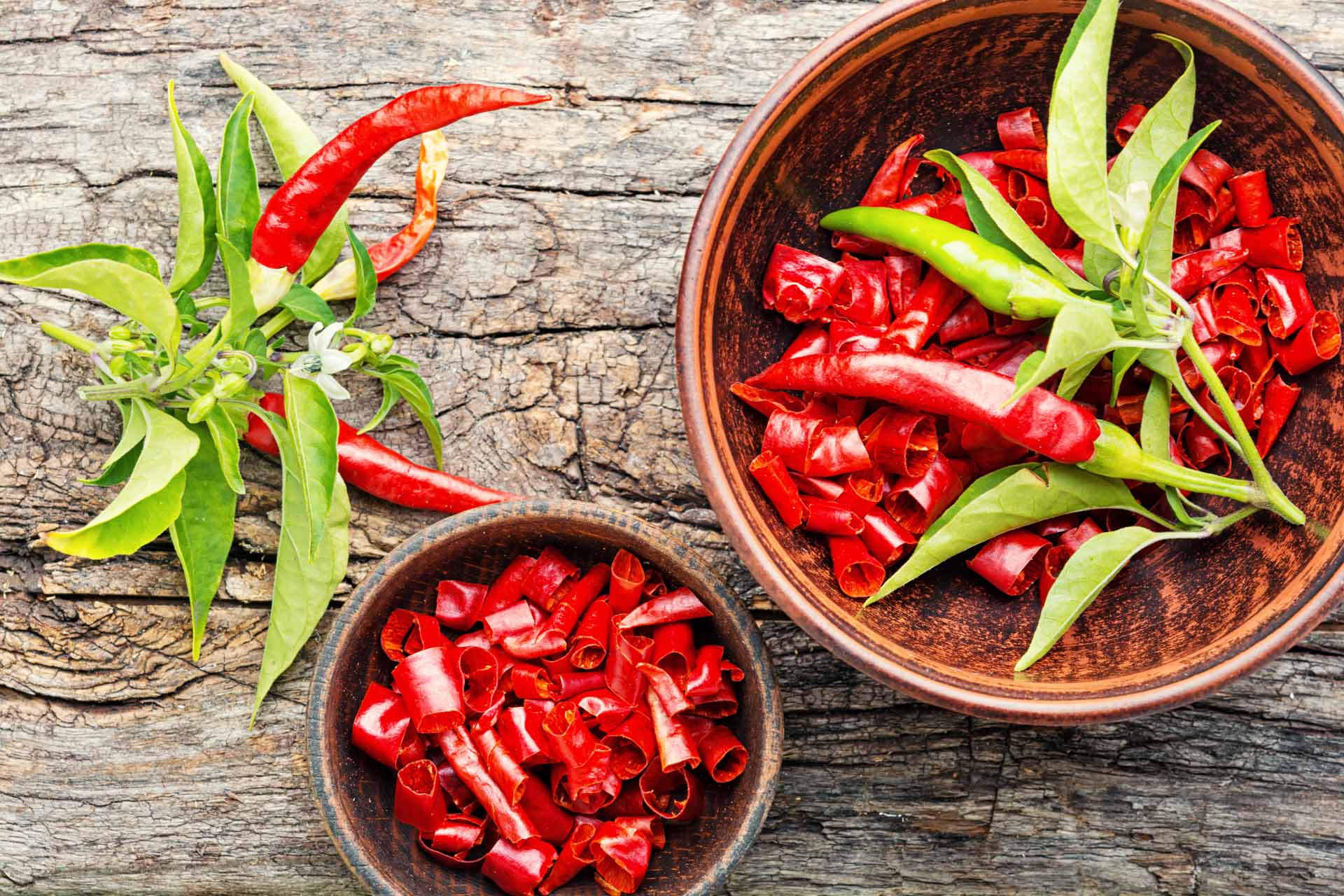
What capsaicin in cayenne pepper actually does
The heat is not a flavour. Capsaicin, the compound that carries it, binds to a receptor on your nerve endings called TRPV1, and that receptor’s job is to report genuine heat. Your mouth is not detecting a taste; it is reporting a temperature that is not there.
That single mechanism explains almost everything cayenne is known for. The flush, the watering eyes, the running nose, the sense of your circulation waking up: all of it is TRPV1 firing and the body responding as if it needs to cool down.
Capsaicin is potent enough that pharmacists build medicines out of it. That is a reasonable place to start when judging whether a spice is doing anything.
Its effect on nerves is well enough established that high-concentration capsaicin patches are a licensed treatment for some kinds of persistent nerve pain, reviewed by Cochrane across eight trials and nearly 2,500 patients. Those are 8% patches applied in a clinic, a world away from a spoonful of spice, but they settle the question of whether capsaicin is biologically active. It plainly is.
Cochrane review, 8 trials, 2,488 participantsTopical capsaicin for chronic neuropathic pain in adults. View on PubMed
Cayenne pepper, metabolism and appetite

Around 2 mg of capsaicinoids a day is where the appetite research starts to find something.
The reason chilli turns up in so much metabolic research is that the heat response has a measurable cost. Pooled trials find capsaicin raises the energy the body burns at rest, by around 70 kilocalories a day in people carrying extra weight. It is a small number, repeated daily.
The more interesting finding is about appetite. A meta-analysis of energy intake data found that capsaicinoids reduced how much people ate, from about 2 mg a day, and appeared to shift preference away from fatty foods. Effects on the scale itself have been modest and inconsistent, so this is a genuine signal rather than a settled result.
Meta-analysis of energy intake dataCould capsaicinoids help to support weight management? View on PubMed
Circulation is the oldest claim attached to cayenne and the one people report most readily: warmth in the hands and feet, a flush across the face. Blood flow to the skin genuinely does increase, which is what the TRPV1 response is for. Whether that translates into anything lasting for the cardiovascular system is still being worked out, with trials in blood pressure and blood fats pointing in promising directions rather than arriving anywhere definite.
Cayenne pepper and the stomach
Chilli has an undeserved reputation here, and it is worth clearing up: spicy food does not cause stomach ulcers. Ulcers are caused by Helicobacter pylori infection and by regular use of anti-inflammatory painkillers, and between them those account for the great majority of cases.
National Institute of Diabetes and Digestive and Kidney DiseasesSymptoms and causes of peptic ulcers. Read the NIDDK page
Laboratory work has gone further and examined capsaicin’s activity against H. pylori and its effects on the stomach lining. That research is at an early stage and is not a reason to treat chilli as a remedy, but it is a long way from the old assumption that spice damages the gut.
What is true is that capsaicin aggravates reflux in people who are prone to it, and that anyone with an ulcer already should leave it alone until it has healed.
What cayenne is genuinely good for
- NutrientsA real source of vitamins A and C and a range of plant compounds, in a spice that costs almost nothing.
- Appetite and metabolismSmall measured effects on both, most consistently around 2 mg of capsaicinoids a day.
- CirculationThe warming effect is real and immediate, whatever the long-term picture turns out to be.
- DigestionCapsaicin stimulates secretion in the gut, which is why so many traditional cuisines pair heat with heavy food.
- Flavour without saltThe most underrated one. Cayenne carries a dish on its own, and anyone watching their sodium can do a great deal with it.
In our tonicCayenne is what gives Natural Elixir Classic its heat, and it is not a gentle warmth. People pull a face. If that sounds like your kind of thing, the Classic tonic is the one built around it. If spice is not for you, the Lite blend leaves the cayenne out. Our cayenne is certified organic and we hold the grower’s certificate.
Who should be cautious with cayenne pepper
- Reflux or heartburnChilli is a reliable trigger if you are prone to it.
- An active stomach ulcerWait until it is healed and treated.
- Blood thinnersWorth a mention to whoever prescribes them, as with most strongly flavoured botanicals.
- Your eyesWash your hands after handling dried chilli. Water alone does not shift capsaicin.
Common questions about cayenne pepper
What is the best way to take cayenne pepper?
In food or in a drink, in an amount you can enjoy regularly. Capsaicinoid doses used in research are small; consistency matters more than intensity.
What are the benefits of drinking hot water with cayenne pepper?
The warmth is pleasant and the capsaicin does what capsaicin does. There is no evidence that the water temperature or the time of day changes anything, so make it when it suits you.
Does cayenne pepper reduce stomach acid?
The laboratory picture is mixed and does not translate simply into what happens after a meal. What is consistent is the symptom: if you get reflux, chilli tends to aggravate it.
Is cayenne pepper good for your kidneys or liver?
Both organs clear waste continuously and do not need help from a spice. Cayenne is a useful way to season food without salt, which is a more practical contribution than any cleanse.
This article is for general information and is not medical advice. Natural Elixir is a natural health tonic and is not intended to diagnose, treat, cure, or prevent any disease. Always speak to a healthcare professional before changing your diet, supplements, or medication, and never stop prescribed treatment without medical guidance.