
What gives ginger its heat
Fresh ginger owes its bite to a family of compounds called gingerols. They are what make a raw slice sharp and almost citrusy, and they are the compounds most of the research follows.
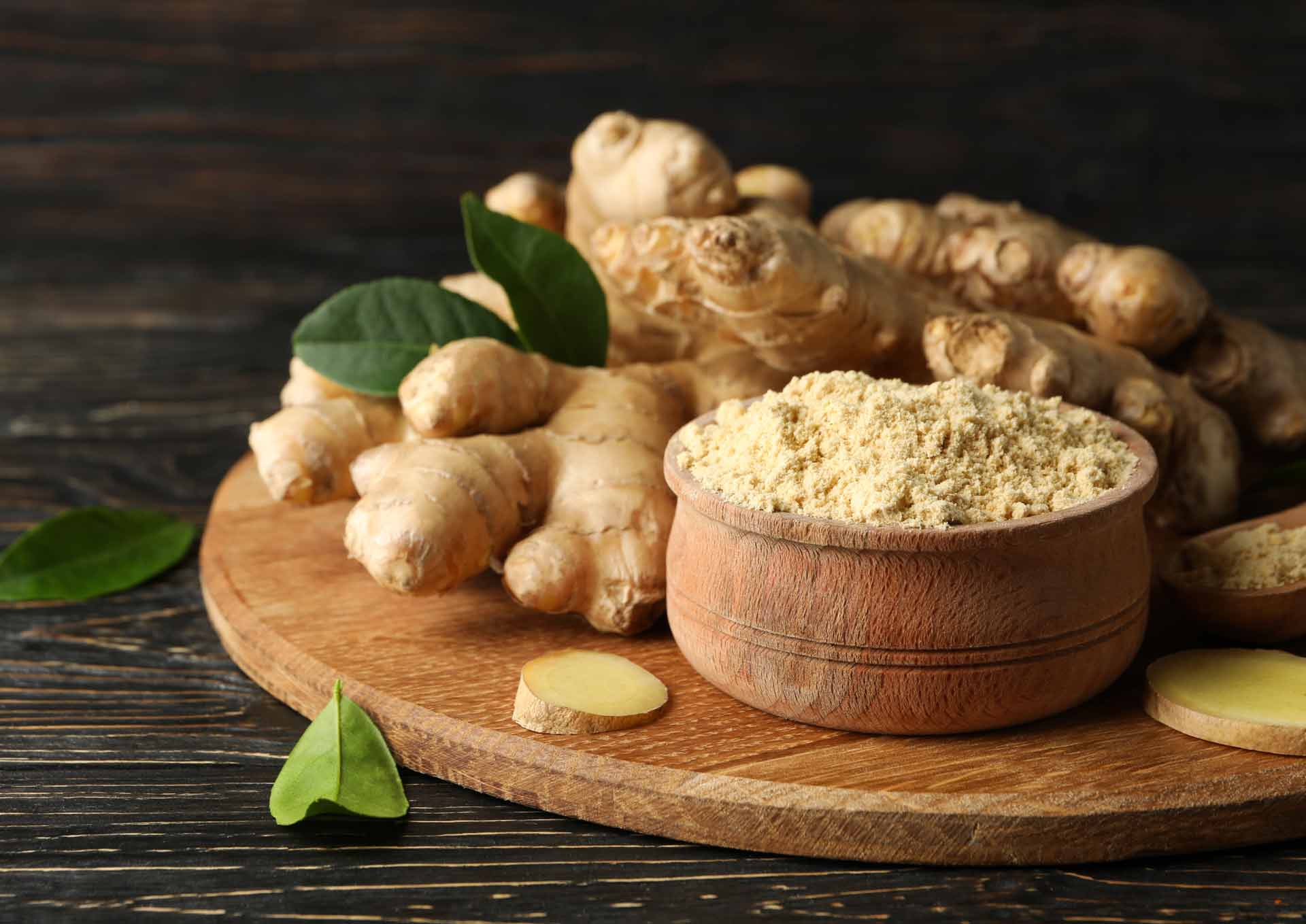
Then something interesting happens when you dry or cook it. Gingerols convert into shogaols, a related group that is noticeably hotter and more pungent. It is the reason ground ginger tastes warm and spicy where fresh ginger tastes bright and sharp: they are not the same spice in different forms, they are chemically different products of the same root.

Fresh and dried ginger are chemically different. Drying turns gingerols into hotter shogaols.
Both are active, and neither is the correct one. It is simply worth knowing that a recipe calling for fresh ginger and one calling for ground are not interchangeable, in flavour or in chemistry.
Ginger and digestive comfort
This is ginger’s oldest and most widespread use, and it is remarkably consistent across cultures that had no contact with one another. Chinese, Indian, Arab, Caribbean and West African cooking all pair ginger with heavy food, and all of them for the same stated reason.
The mechanism most often studied is gastric emptying: ginger appears to influence how quickly the stomach passes food along, which is a plausible route to the settled feeling people describe. Formal trial evidence here is thinner than you would expect for something used this widely, so this is better described as a long-established traditional use with a sensible mechanism behind it than as a proven effect.
It is also the reason ginger works so well in a drink. Warmth, bite and a settled stomach are the three things people reach for it for, and none of them require a supplement.
Ginger and inflammation
Ginger’s anti-inflammatory activity is the most formally studied thing about it after nausea, and the honest summary is modest but real.
A meta-analysis of randomised placebo-controlled trials found oral ginger modestly efficacious for pain and physical function in people with osteoarthritis, with the evidence rated moderate quality. Reported side effects were mild and reversible, mostly the taste or a little stomach upset.
Meta-analysis of randomised placebo-controlled trialsEfficacy and safety of ginger in osteoarthritis patients, Osteoarthritis and Cartilage. View the meta-analysis
Exercise-related muscle soreness has been looked at in smaller trials, generally around 2 g a day, with effects showing up on next-day soreness rather than immediately after training.
How much ginger, and how often
The trials cluster between one and two grams a day. Two grams is a heaped teaspoon of ground ginger, or a decent thumb of fresh root.
The striking thing about ginger’s research is how ordinary the doses are. This is not a compound that needs concentrating to do anything, which sets it apart from most of what gets studied.
Regularity matters more than quantity. The trials that found something ran for weeks rather than days, at everyday amounts, which makes ginger one of the easier findings to act on: it asks for a habit rather than a supplement.
What ginger is genuinely good for
- Digestive comfortGinger’s oldest and most consistent traditional use, across almost every cuisine that grows it.
- InflammationModest, real, and studied to a reasonable standard at everyday doses.
- Warmth without burnFresh ginger gives a drink lift and bite without the heat of chilli, which is why it works in tea, cordial and tonic alike.
- NauseaThe best-evidenced thing any kitchen spice does, and reachable with food.
- Flavour that does the work of salt and sugarA little fresh ginger carries a dish or a drink on its own.
In our tonicGinger is in every bottle Natural Elixir makes, and it is doing two jobs: it is one of the nine botanicals, and it is a good part of the reason the tonic tastes the way it does. You will find it across the whole range, from the Classic through to the Lite. Our ginger comes from a GlobalGAP-certified farm that grows organically and sustainably. The root is not certified organic.
Who should be cautious with ginger
Ginger has an unusually clean safety record, which is part of why it is studied so readily. Two things are worth knowing.
- Blood thinnersGinger has a mild antiplatelet effect. The clinical evidence for a real interaction is thin, but it is standard to mention it to whoever prescribes for you.
- HeartburnAt higher intakes ginger can cause reflux or a burning sensation in some people. Less common than with chilli, and worth knowing if you are prone to it.
Ginger for nausea, its best-known use
Sailors, midwives and grandmothers got here long before the clinical trials did, and on this one the trials agree with them.
A meta-analysis pooling twelve randomised controlled trials, covering 1,278 pregnant women, found ginger significantly improved nausea compared with placebo. Doses were modest, generally 500 mg to 1,500 mg a day, and the reviewers found no increase in adverse outcomes.
Meta-analysis, 12 trials, 1,278 participantsThe effect and safety of ginger in the treatment of pregnancy-associated nausea and vomiting. Read the review
One distinction is worth keeping: the same analysis found no significant reduction in the number of vomiting episodes, only a trend towards it. Ginger settles the queasiness rather than stopping the vomiting. Pregnancy is also the one time to run anything past a midwife or doctor first, however ordinary the ingredient.
Common questions about ginger
Is it good to eat ginger daily?
For most people, yes, and the research points that way: the trials that found effects used everyday amounts taken consistently over weeks rather than large occasional doses.
Is it better to eat ginger raw or cooked?
Neither is better, they are different. Raw keeps the gingerols and tastes sharper; drying and cooking make shogaols and taste hotter. Use whichever suits the dish.
Should I drink ginger at night or in the morning?
There is no evidence that timing changes anything. Pick the time you will actually stick to, since consistency is the part that shows up in the research.
Which is better, turmeric or ginger?
They answer different questions. Ginger’s research is strongest on nausea and digestion; turmeric’s is concentrated on inflammation and its absorption problem. They are relatives, they work well together, and traditional cooking has paired them for centuries.
Can I boil ginger and garlic together and drink it?
You can, and plenty of traditions do. It is a strong drink and hard on an empty stomach, so it suits some people and not others. Nothing about the combination is harmful.
This article is for general information and is not medical advice. Natural Elixir is a natural health tonic and is not intended to diagnose, treat, cure, or prevent any disease. Always speak to a healthcare professional before changing your diet, supplements, or medication, and never stop prescribed treatment without medical guidance.