
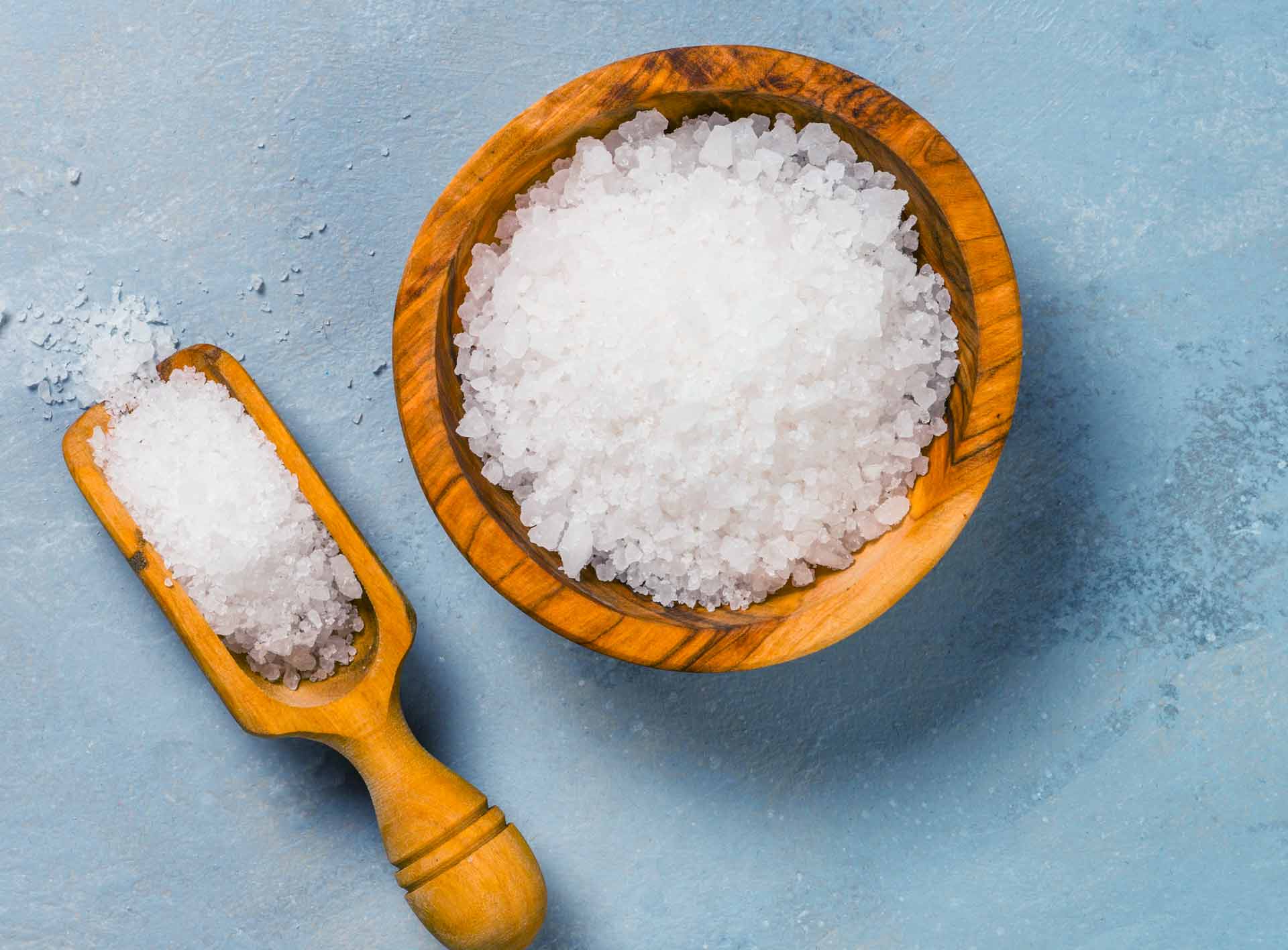
What sea salt actually is
Sea salt is made by letting seawater evaporate, in shallow ponds, under sun and wind, until what is left behind is crystal. Table salt is generally mined from ancient seabeds that dried out millions of years ago and then refined. Both are sodium chloride. The difference is in what happens after the water goes.

Evaporated rather than mined and refined. What survives is texture and trace minerals.
Unrefined sea salt keeps what the sea left with it. Traces of magnesium, calcium and potassium ride along, which is what gives good sea salt its faintly grey or pink cast and its slightly rounder taste. Refining strips those out and usually adds an anti-caking agent so the grains pour freely, and in many countries iodine, which was one of the great public health wins of the twentieth century.
The texture difference is real and worth something in a kitchen. Flakes and coarse crystals dissolve at a different rate and land on the tongue differently, which is why chefs finish a dish with sea salt and season the pot with fine salt.
Sea salt and electrolytes: what is actually going on
Electrolytes are minerals that carry an electrical charge when dissolved. Your body runs on them: they govern fluid balance, nerve signalling and muscle contraction, and the main ones are sodium, potassium and chloride, with magnesium and calcium alongside.
Salt is genuinely two of them. Sodium and chloride are not a marketing angle, they are the substance itself, and they make up somewhere between 85% and 99% of any salt you buy.
The electrolytes doing the work in sea salt are sodium and chloride. The trace minerals are real, and they are under one per cent.
That is the honest shape of it. The magnesium and potassium in unrefined sea salt exist, and at those quantities they are not a meaningful source of either. Sea salt is not an electrolyte supplement, and no salt is.
Which leads to the question people are usually really asking. Salted water is genuinely useful when you have lost a lot of fluid quickly, after heavy sweating, hard physical work in heat, or illness. For everyday hydration, most people already take in more sodium than they need from food, and adding more to a glass of water solves a problem they do not have. A pinch is plenty; if your water tastes of the sea, there is far too much in it.
Is sea salt healthier than table salt?
Better in some ways, and not in the way most people mean.
Less processing is real. The trace minerals are real. The texture and flavour differences are real and are the reason to buy it. What does not change is the part that actually matters for health: the sodium. Gram for gram, sea salt and table salt deliver essentially the same amount, and sodium is the component every health authority in the world is trying to reduce.
The World Health Organization recommends under 2 g of sodium a day, about 5 g of salt. Global average intake is more than double that.
World Health OrganizationSodium reduction fact sheet. Read the fact sheet
South Africa took this seriously earlier than most, with regulated sodium limits across a long list of processed foods. So switching from table salt to sea salt is a decision about flavour and about how processed you want your food to be. It is not a way to eat less sodium. That only comes from using less salt.
One thing worth not losing in the swap: if you move away from iodised salt entirely, iodine has to come from somewhere else in the diet. It matters, and it is the one genuine argument in favour of ordinary table salt.
What sea salt is genuinely good for
- FlavourSalt does not only taste salty. It suppresses bitterness, lifts sweetness and makes almost everything taste more like itself. No other single ingredient does that.
- Preserving foodThe oldest preservation method there is, and the reason salt was once traded like currency.
- TextureFlakes and coarse crystals behave differently on the tongue and at the finish of a dish. This is why cooks care about it.
- Replacing what heavy sweating takesGenuinely useful after real fluid loss, rather than as a daily habit.
- Sodium and chloride themselvesEssential to being alive, needed in small amounts, and almost impossible to fall short of on a normal diet.
In our tonicSea salt is in every Natural Elixir blend, and it is there for balance and flavour rather than as a source of anything. Laboratory analysis puts the sodium at under 1 mg per 100 g, which works out at less than a quarter of a milligram in a 25 ml serving, against a daily limit of 2,000 mg. In other words this is a daily shot you can take without it counting toward your salt at all. Sea salt appears throughout the range.
Who should be cautious with sea salt
- Anyone told to watch their sodiumHigh blood pressure, heart failure and kidney disease all come with sodium advice, and sea salt is not an exception to it.
- Anyone relying on it for iodineMost sea salt is not iodised. If it replaces table salt entirely, iodine needs another source.
- Salt water as a daily drinkNot a cleanse and not a routine worth having. Salt does not detoxify anything; your kidneys do that, continuously.
And one thing worth saying plainly: cramps, fatigue, dizziness and palpitations are sometimes attributed to low electrolytes online, but an electrolyte imbalance is a medical condition diagnosed with a blood test, and its causes are things like kidney disease and certain medications. If you have those symptoms, that is a doctor’s appointment, not a drink.
Common questions about sea salt
Can I add sea salt to my drinking water?
You can, and it is genuinely useful after heavy sweating or fluid loss. For ordinary days most people already get plenty of sodium from food, so it is solving a problem they do not have. A tiny pinch is the right amount.
What type of salt is best for electrolytes?
They are all much the same. Every salt is mostly sodium and chloride, and the trace minerals that vary between them are too small to change the answer. Choose on flavour and texture instead.
What is the best natural electrolyte source?
Food. Potatoes, beans, leafy greens, dairy, bananas and nuts between them cover potassium, magnesium and calcium far better than any salt does, and sodium arrives on its own.
Why is unrefined sea salt grey or pink?
Trace minerals and, in some cases, clay from the evaporation pond. It is a sign the salt has not been refined, which is the point of buying it.
This article is for general information and is not medical advice. Natural Elixir is a natural health tonic and is not intended to diagnose, treat, cure, or prevent any disease. Always speak to a healthcare professional before changing your diet, supplements, or medication, and never stop prescribed treatment without medical guidance.