
What chaga mushroom actually is
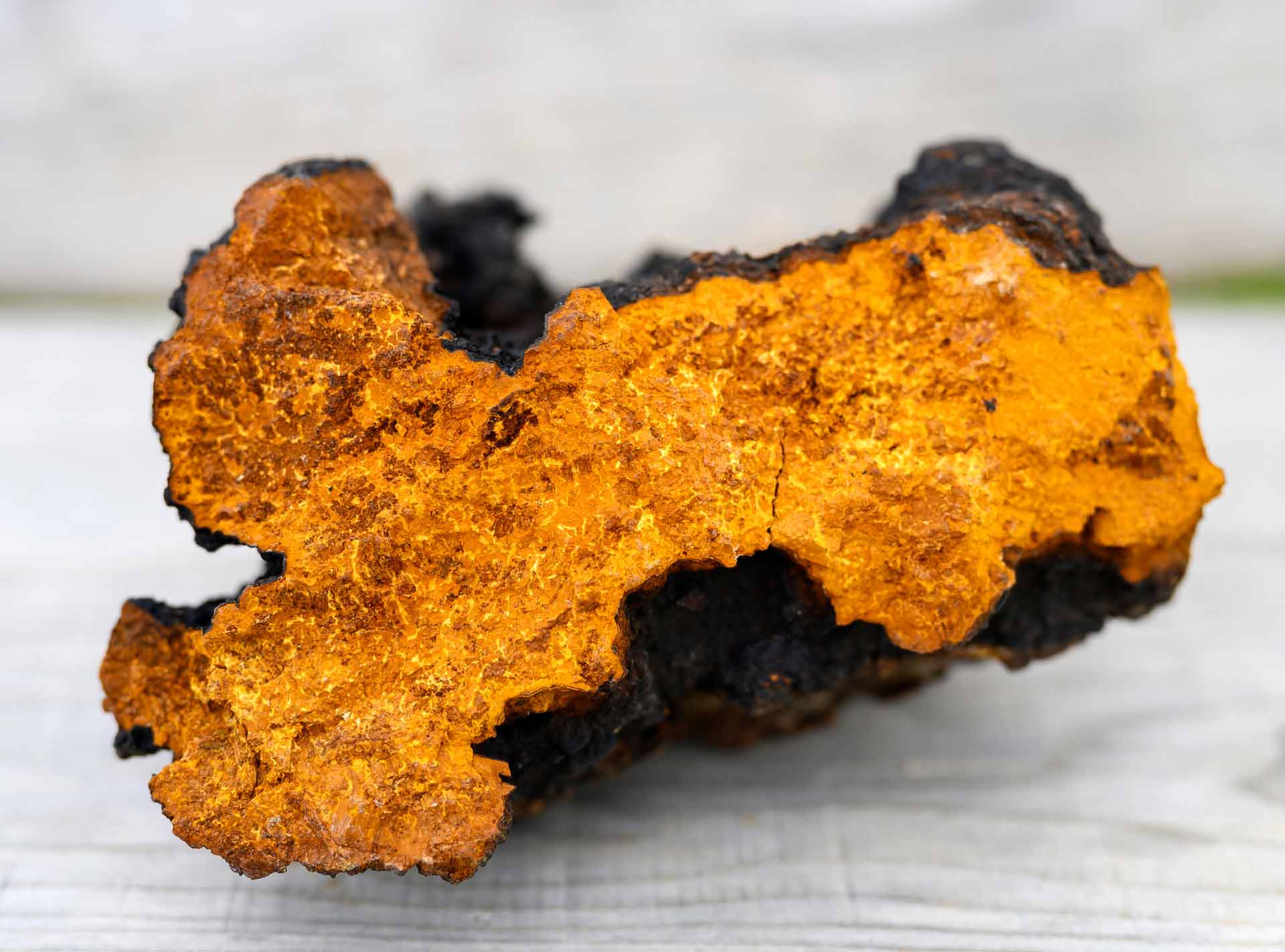
Chaga is Inonotus obliquus, a fungus that grows on living birch trees across the cold northern band of the world: Siberia, northern Russia, Scandinavia, Canada, Alaska. What gets harvested is not a mushroom cap but a sclerotium, a dense sterile mass of fungal tissue that bulges out through the bark. It looks like a lump of burnt charcoal and it is hard enough that it has to be chipped or sawn away rather than picked.

Chaga is found rather than farmed, and almost always on birch.
The black comes from melanin, the same family of pigment that colours human skin and hair. Chaga carries an unusual amount of it, which is part of why its antioxidant readings run so high in the laboratory.
It grows slowly, as everything does at those latitudes. A conk worth harvesting has usually been on its tree for years and often for well over a decade, which is also why wild chaga has a supply problem that cultivated and fermented sources are working to solve.
Where chaga gets its compounds
This is the genuinely unusual thing about chaga, and it is worth knowing before any of the health research.
Chaga is a parasite. It feeds on the living birch, and in doing so it draws up and concentrates compounds from the tree itself. Betulin and betulinic acid, two of the triterpenoids chaga is studied for, are birch bark compounds. The fungus does not invent them.
Chaga does not make betulinic acid. It takes it from the birch it grows on, and concentrates it.
Alongside those sit the compounds chaga produces itself: beta-glucans and related polysaccharides, which make up around ten per cent of the raw material, plus polyphenols and that melanin. Close to seventy per cent of the rest is woody fibre, which is why chaga is always extracted into a liquid rather than eaten.
Lu et al., International Journal of Molecular Sciences, 2021Isolation, structure and biological activity of Inonotus obliquus polysaccharides. Read the review
What the research on chaga shows
Chaga has been studied hard for two decades, and the honest summary is that the laboratory work is extensive while the human work is not. Nearly everything below comes from cell studies and animal models.
Antioxidant activity is the best established of them. It can be measured directly, it is consistent across studies, and it traces clearly to the melanin and polyphenols. This is the property nobody argues about.
Blood sugar and blood lipids come next, and the animal work is consistent enough to be interesting. In diabetic mouse models chaga polysaccharides improved insulin sensitivity and lowered fasting glucose, with a plausible mechanism behind it: they slow the gut enzymes that break starch down into sugar, so glucose arrives more gradually. Human trials have not been run.
Immune signalling. Beta-glucans are recognised by receptors on immune cells and prompt a measurable response. That is well-described cell biology and the reason medicinal mushrooms are studied at all. What it amounts to for a healthy person drinking chaga is still open.

Charcoal black outside, rust orange within.
Cancer research. Chaga’s folk reputation is bound up with cancer, and there is a real body of laboratory work behind it: extracts show cytotoxic effects on isolated cancer cell lines, and tumour growth slowed in tumour-bearing mice. None of it has been tested in people, and findings in a dish or a mouse routinely fail to carry across. Anyone in cancer treatment should raise chaga with their oncologist first, for interaction reasons as much as anything.
Brain and skin appear constantly in search results and rest on much less: a few animal studies on brain ageing, and cell-culture work on betulinic acid and collagen. Early, and worth following rather than counting on.
Therapeutic properties of Inonotus obliquus, Mycology, 2024A review concluding that studies meeting evidence-based medicine criteria are still needed. Read the review
What chaga mushroom is genuinely good for
- Antioxidant densityIts melanin and polyphenol content is exceptional, and unlike most of the list it is directly measurable.
- Beta-glucansThe compound class behind essentially all medicinal mushroom research, and chaga is a good source.
- A dark, bitter brewSteeped, chaga lands nearer coffee than mushroom: earthy, faintly vanilla, not remotely fungal.
- Five centuries of useA winter staple across Siberia, Russia and northern Europe long before anyone analysed it.
- Trace mineralsPotassium, manganese and zinc, in small amounts.
In our tonicChaga is the quiet one in the Natural Elixir blend. It adds no heat and almost no flavour; what it brings is the antioxidant and beta-glucan side of the mix, in the small daily amounts that suit a tonic rather than the gram-scale doses of powdered supplements. You can see where it sits across the range.
Who should be cautious with chaga mushroom
Chaga is well tolerated in the amounts found in food and drink, but it carries one genuine issue and a few real interactions.
- Kidney stones or kidney diseaseChaga is high in oxalate, and there are documented cases of serious kidney damage from heavy long-term use. Those cases involved 10 to 15 grams of chaga powder every day for months, far above culinary amounts, but if you have a history of stones or reduced kidney function this is the ingredient to raise with your doctor.
- Blood thinnersChaga may add to the effect of warfarin and similar medication.
- Diabetes medicationIf chaga nudges blood sugar down and your medication is already doing so, the two can stack.
- Immunosuppressants and autoimmune conditionsBeta-glucans act on the immune system, which is the opposite of what immunosuppressive treatment is there to do.
- Pregnancy and breastfeedingNot studied. The standard advice is to leave it.
Case report, chaga-induced oxalate nephropathyA patient taking 10 to 15 g of chaga powder daily alongside vitamin C for three months. Read the case report
Common questions about chaga mushroom
Is it safe to take chaga every day?
In the small amounts found in a tonic or a daily tea, there is no evidence of a problem, and daily use is exactly how the tradition works. The harm reported in the literature involved gram-scale powdered doses taken every day for months. Dose is the whole difference.
What should you not mix with chaga?
Blood thinners, diabetes medication and immunosuppressants are the three worth checking. High-dose vitamin C also turns up in the kidney case reports, because the body converts some of it to oxalate and chaga is already high in that.
What does chaga do to your brain?
Less than the search results imply. There are animal studies on brain ageing and oxidative damage, and no human trials. People do often describe feeling clearer after a cup, which may owe as much to a warm bitter drink and a pause in the day as to the mushroom.
Does chaga boost collagen?
It contains none, and the idea comes from cell-culture work showing betulinic acid can stimulate collagen synthesis. That is a long way from a drink changing anything about skin.
What does chaga taste like?
Coffee’s earthier country cousin. Bitter, a little woody, a hint of vanilla, and mercifully nothing mushroomy about it.
This article is for general information and is not medical advice. Natural Elixir is a natural health tonic and is not intended to diagnose, treat, cure, or prevent any disease. Always speak to a healthcare professional before changing your diet, supplements, or medication, and never stop prescribed treatment without medical guidance.