
What black pepper actually is
Black pepper is the dried unripe fruit of Piper nigrum, a climbing vine native to the Malabar coast of India. It has been traded for well over two thousand years, was used as currency and as ransom, and drove a good deal of the exploration that redrew the map. For most of recorded history it was the most valuable spice in the world.
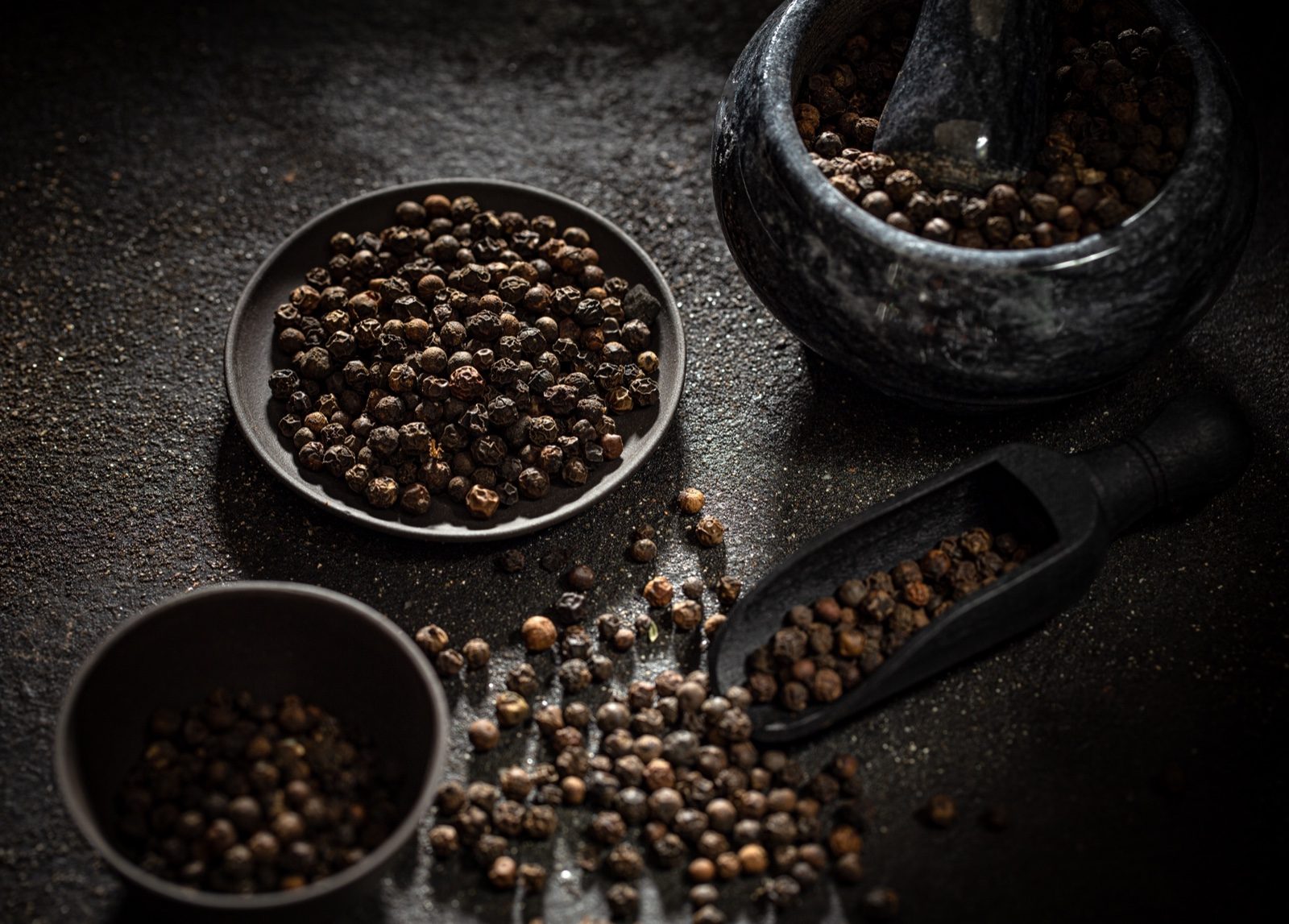
Black, white and green pepper are the same fruit, picked and processed differently.
Black, white and green peppercorns all come from that one plant. Green are picked unripe and preserved before they can darken; black are picked unripe and dried until the skin shrivels and blackens; white are ripe berries with the outer layer removed. Same fruit, three different decisions.
The compound that matters is piperine, which makes up roughly five per cent of black pepper. It is what gives pepper its bite, and it is unrelated to the capsaicin in chilli despite the shared word “pepper”: different compound, different plant family, different mechanism entirely.
Why turmeric needs black pepper
This is the reason black pepper belongs in a wellness blend rather than just on a table, and it is one of the most useful pieces of kitchen chemistry there is.
Curcumin, the active compound in turmeric, is notoriously difficult to absorb. Taken on its own, most of it is broken down and cleared before it can do anything. Piperine interferes with that clearance, slowing the metabolic processes that would otherwise dispose of curcumin, so more of it survives and reaches the bloodstream.
Combining black pepper with turmeric increases curcumin’s bioavailability by 2000%.
That figure comes from Johns Hopkins Medicine, and the amounts involved are small: the research pairs a substantial dose of curcumin with roughly 20 mg of piperine, which is a pinch of pepper rather than a spoonful.
Johns Hopkins MedicineTurmeric benefits, with Mary-Eve Brown, R.D.N., oncology clinical dietitian. Read the Q&A
Traditional cooking arrived here first, as it usually does. Curry powder has always contained both, and the pairing shows up across South and Southeast Asian cooking long before anyone could explain it.
One thing worth being clear about, because the word “pepper” causes real confusion: cayenne cannot do this job. Cayenne contains capsaicin, black pepper contains piperine, and only piperine has been shown to lift curcumin absorption. They are not interchangeable, however similar their names.
What else black pepper does
The absorption effect is not specific to turmeric. Piperine has been shown to alter how the body takes up and clears a range of compounds, which is a genuinely interesting property for something sitting in a pepper mill, and it is why researchers keep coming back to it.
Analytical study, human urinary curcumin levelsEffect of pepper on curcumin bioavailability, measured by LC-MS/MS. Read the study
Beyond that, pepper’s own credentials are modest and real. It carries antioxidant plant compounds, contributes small amounts of manganese and vitamin K, and has a long traditional association with digestion across Ayurvedic and Chinese medicine. None of that is why it is worth including. The absorption effect is.
What black pepper is genuinely good for
- Making turmeric worth takingThe single most useful pairing in the spice rack, and the reason it is here.
- Absorption more broadlyPiperine’s effect on how compounds are taken up and cleared is well documented and still being explored.
- Warmth without burnPepper’s heat is sharper and shorter than chilli’s, which is why it works where cayenne would overwhelm.
- Flavour instead of saltPepper lifts a dish on its own, and it is the standard first move for anyone reducing sodium.
- Antioxidants and trace nutrientsModest, genuine, and a bonus rather than a reason.
In our tonicBlack pepper is in the Natural Elixir blend for one reason, and it is not flavour. It is there to make the turmeric count. Most turmeric drinks skip it, which quietly wastes most of the turmeric they contain. If you want the gentler bottle, the pepper carries the warmth where cayenne carries the fire, and you can compare them across the range. Our black pepper is certified organic and we hold the grower’s certificate.
Who should be cautious with black pepper
Pepper on food is food, and has been for millennia. The caution attaches to the same property that makes it useful.
- Prescription medicationBecause piperine slows the processes that clear compounds from the body, it can in principle raise the levels of some drugs. This is a concern with concentrated piperine supplements rather than with seasoning, but if you take regular medication it is worth mentioning.
- RefluxPepper is a common trigger for people who are prone to it, in the same way chilli is.
- Piperine supplementsThe isolated compound is a different proposition from the spice, and is not something to take casually.
Common questions about black pepper
How much black pepper does turmeric need?
Very little. The research pairs a large amount of curcumin with about 20 mg of piperine, so a pinch alongside a teaspoon of turmeric is the right sort of ratio. More pepper does not mean more effect.
Can I use cayenne instead of black pepper with turmeric?
No. The effect belongs to piperine, which is in black pepper and not in cayenne. Cayenne has its own merits; this is not one of them.
Is freshly ground pepper better?
For flavour, noticeably. Pepper’s aromatic oils fade after grinding, which is why pre-ground pepper tastes flat. Piperine itself is more stable, so the absorption property survives either way.
What is the difference between black, white and green pepper?
When it was picked and what was done to it. Green is unripe and preserved fresh, black is unripe and dried, white is ripe with the outer layer removed. White is milder and earthier; black is the sharpest.
This article is for general information and is not medical advice. Natural Elixir is a natural health tonic and is not intended to diagnose, treat, cure, or prevent any disease. Always speak to a healthcare professional before changing your diet, supplements, or medication, and never stop prescribed treatment without medical guidance.