
Allicin, and why crushing garlic matters

An intact clove contains no allicin. Crushing makes it, in seconds.
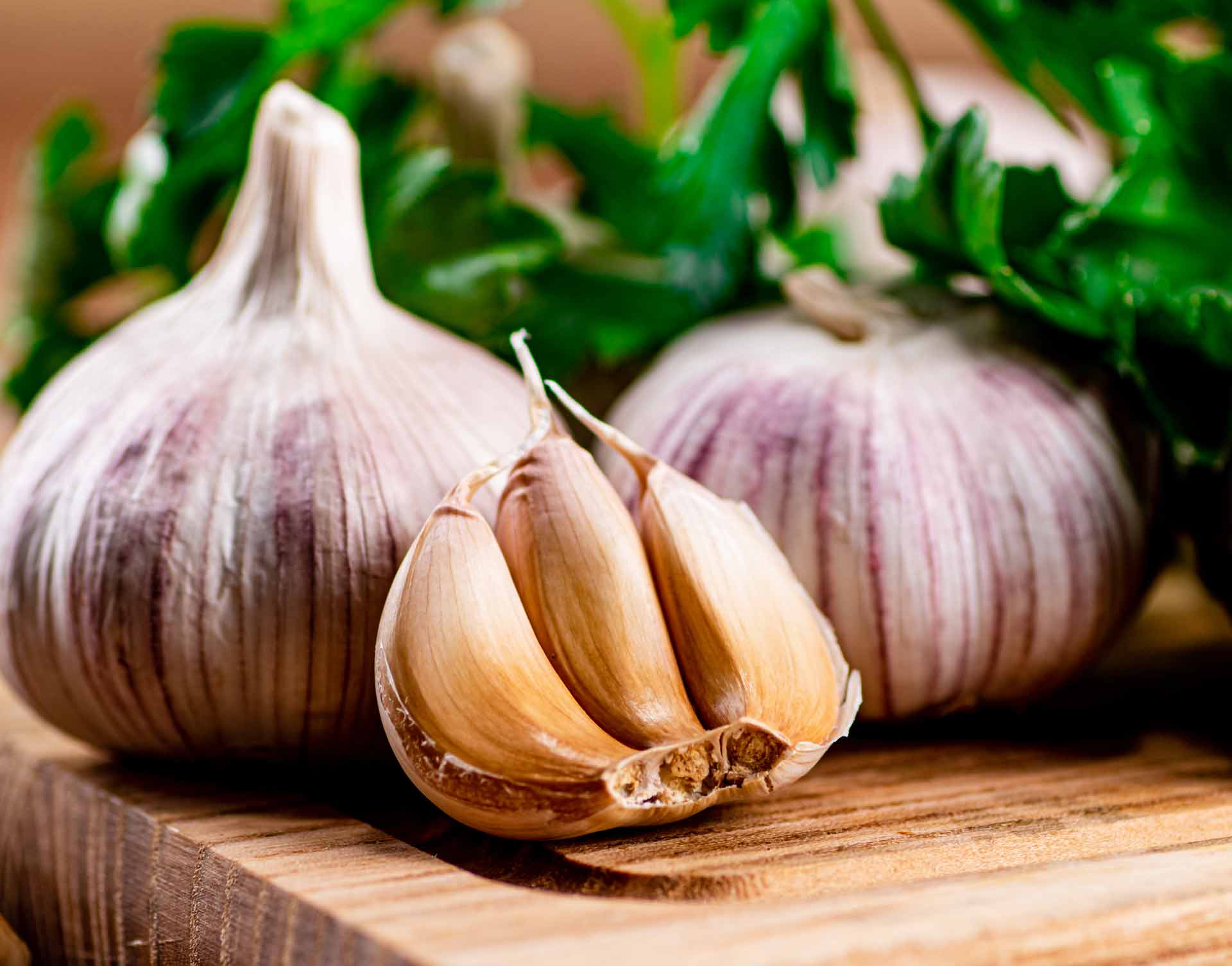
A whole garlic clove contains no allicin at all. It holds a stable precursor and an enzyme in separate compartments, and only when the clove is damaged do the two meet and make allicin on the spot. That reaction is what you smell when garlic hits the board.
Allicin is also short-lived, converting into a family of other sulphur compounds within minutes and faster under heat. This is the reason for one of the few pieces of kitchen advice that is straightforwardly chemistry: crush the garlic and let it stand for ten minutes before it goes near a pan. The reaction finishes, and more of it survives the cooking.
Garlic and blood pressure
This is the most thoroughly studied thing garlic does, and the results are genuinely striking. A meta-analysis of twelve trials covering 553 people with raised blood pressure found garlic preparations lowered systolic pressure by around 8 mmHg and diastolic by around 5 mmHg.
Meta-analysis, 12 trials, 553 participantsGarlic lowers blood pressure in hypertensive subjects, improves arterial stiffness and gut microbiota. View on PubMed
Two things are worth knowing about those numbers. The effect showed up in people whose blood pressure was already high, not in people whose readings were normal. And the trials used aged garlic extract or standardised powder at measured daily doses, which is more concentrated than cooking delivers.
None of that makes garlic a substitute for blood pressure medication, and nobody should stop prescribed treatment. It does make garlic one of the more interesting foods in the cardiovascular literature.
Garlic makes food taste of something without salt or fat. For heart health that is a small, certain gain, and it does not depend on any trial holding up.
Cholesterol runs along similar lines. Reviews find modest reductions in total and LDL cholesterol, mainly in people whose levels are already raised, again using concentrated preparations. The effect is real but small, and it is not the reason to eat garlic.
Updated meta-analysis and reviewGarlic lowers blood pressure in hypertensive individuals, regulates serum cholesterol, and stimulates immunity, The Journal of Nutrition. View the review
Garlic, colds and the immune system
Garlic’s reputation for warding off illness is ancient and worldwide, and the laboratory work behind it is real: allicin is strongly antimicrobial in a dish, against bacteria, viruses and fungi alike.
The clinical picture is much thinner, and interestingly so. Cochrane reviewers found a single trial that met their standards: 146 people took an allicin capsule or a placebo for twelve weeks, and the garlic group reported 24 colds against 65 on placebo. That is a large difference in a well-conducted small trial, and it is the only one of its kind.
Cochrane review, 146 participantsGarlic for the common cold. Read the review
So the honest position is that this is a promising, under-studied question rather than a settled one, which is a strange thing to be able to say about a remedy this old and this widely used. If you take garlic through the winter because it has always seemed to help, there is nothing in the literature to contradict you.
Never use garlic on skin or gums
Raw garlic held against skin or gum causes chemical burns. There are published case reports of exactly this, including a man who packed crushed garlic against a painful tooth and ended up with a burn and dead tissue at the site.
Case report, Journal of the American Dental AssociationGarlic burn of the oral mucosa. View on PubMed
Garlic belongs inside you, not pressed against you. Toothache is a dentist’s job.
What garlic is genuinely good for
- Blood pressureThe best-evidenced thing garlic does, in people whose readings are already high.
- CholesterolModest, real, mostly in people with raised levels.
- NutrientsManganese, vitamin B6, vitamin C and selenium, for almost no calories.
- Gut bacteriaGarlic’s fructans are prebiotic, feeding the bacteria already living in your gut.
- Flavour instead of saltQuietly the most useful thing on this list.
In our tonicGarlic is one of the nine botanicals in every Natural Elixir blend, sitting alongside cayenne and apple cider vinegar. It is a lively combination first thing in the morning, and if reflux is something you get, start with a smaller serve. You will find garlic in every tonic in the range. Our garlic is certified organic and we hold the grower’s certificate.
Who should be cautious with garlic
- Blood thinnersGarlic has a mild antiplatelet effect. Worth mentioning to your prescriber, particularly if you take concentrated supplements.
- Surgery coming upThe usual advice is to pause garlic supplements a week or two beforehand.
- Reflux, or a sensitive gutRaw garlic in quantity is a common trigger, and its fructans are why it appears on low-FODMAP lists.
Common questions about garlic
What happens if we eat garlic daily?
For most people it is simply a vegetable eaten daily, which is a reasonable habit. You will smell of it a little. If you are prone to reflux you may notice that first.
Is it better to chew or swallow garlic?
Chewing or crushing is what makes allicin, so a whole clove swallowed intact releases very little. It is also, predictably, harder on the breath.
Does cooking destroy the benefits?
Heat stops the reaction that makes allicin, so raw garlic carries more of it. Crushing and waiting ten minutes before cooking lets the reaction finish first, which is the simplest way to get both flavour and compound.
What about the breath?
Some sulphur compounds are absorbed and released through the lungs, which is why brushing helps less than you would hope. Milk, apple and mint all have some evidence behind them. Time works best.
This article is for general information and is not medical advice. Natural Elixir is a natural health tonic and is not intended to diagnose, treat, cure, or prevent any disease. Always speak to a healthcare professional before changing your diet, supplements, or medication, and never stop prescribed treatment without medical guidance.