

Why it gets harder to bounce back as you get older
There is a moment, usually somewhere in the forties, when you notice that the things you used to get away with no longer come free. A late night costs two days. A heavy meal sits differently. An injury that would once have cleared in a week takes a month.
Nothing has gone wrong. What has happened is that the margin has narrowed, and the margin was always what you were spending.
The most measurable part of that is muscle. From about thirty onwards adults lose somewhere in the order of 3 to 8 per cent of their muscle mass per decade, and the rate picks up after sixty. Muscle is not only what moves you: it is where a great deal of your glucose handling and your everyday resilience lives. Lose enough of it and everything feels heavier, including the day.
Harvard Health, on preserving muscle massAn overview of age-related muscle loss and what slows it. Read the overview
Here is the encouraging half, and it is genuinely encouraging. Muscle responds to being asked to work at any age. The capacity to build it does not switch off, and trials in older adults using properly meaningful loads, rather than the light bands usually handed out, show real gains. This is one of the few things in health where the intervention is free and the evidence is not in dispute.
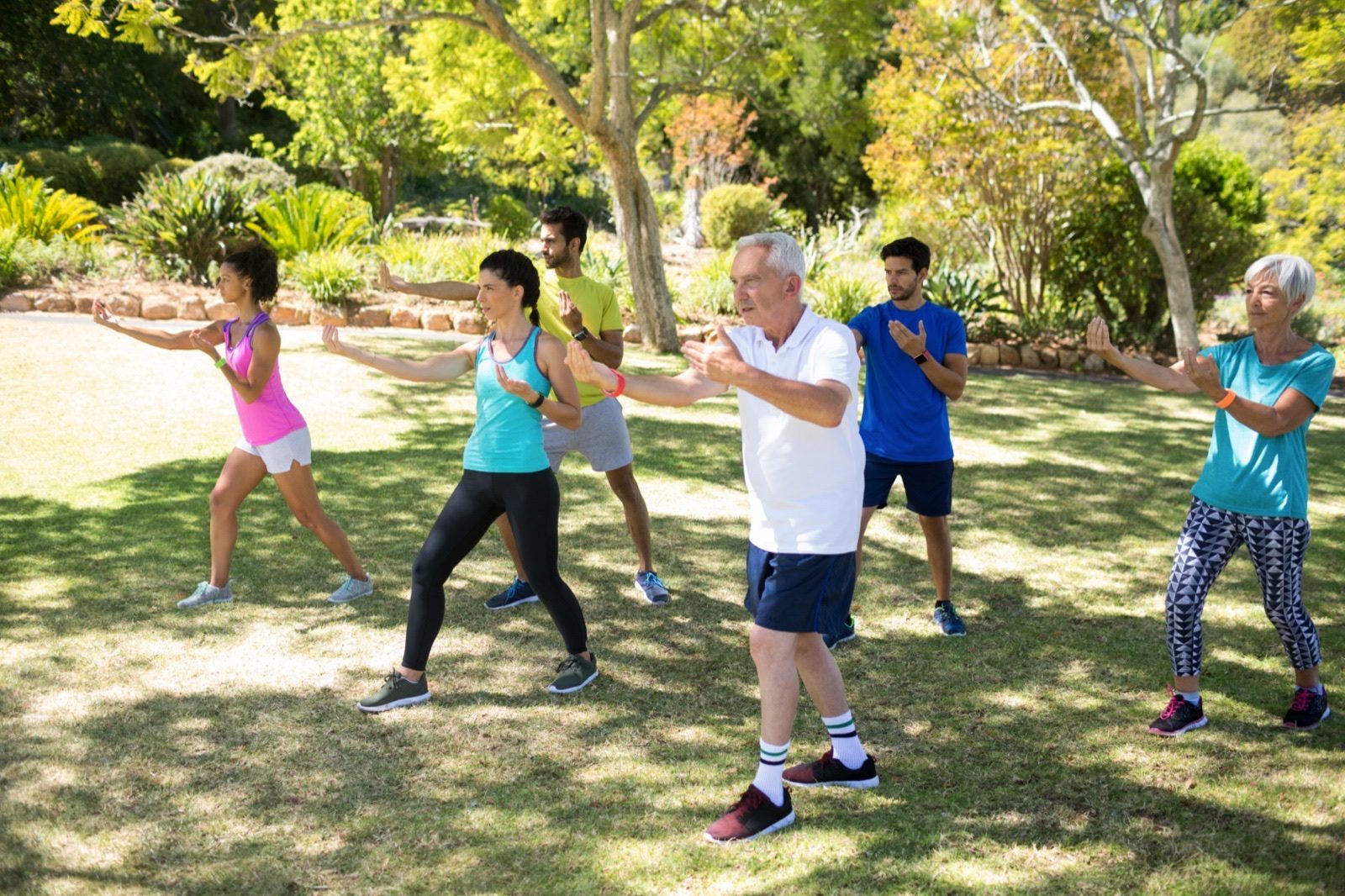
The body does not stop responding. It only stops being asked.
Your body is the barometer
Brett has a phrase for this that has stuck with everyone here: your inner feng shui. The state of your being, the quality of your thoughts and how you actually feel, read as one instrument.
You were given a body that came with its own health barometer. The trick is reading it before it starts shouting.
Most of us wait for the warning light. We service the car when something is smoking on the highway rather than at the interval in the book, and then we are surprised by the bill. Bodies work the same way and they give far more notice than cars do: the poor sleep, the afternoon flatness, the meal that no longer agrees with you. All of it is information, arriving early, usually ignored.
Reading it is a habit rather than a talent. Notice what you ate and how the next morning went. Notice which weeks you moved and which you did not. You will have the pattern inside a month, and it will be more useful to you than any general advice, including ours.

Twice a week against real resistance. The highest-return habit on the list, and the one most often skipped.
The habits that matter most after forty
Unglamorous, and that is rather the point. Nothing here is new and all of it holds up.
- Ask your muscles for somethingTwice a week, against real resistance. This is the single highest-return habit on the list and the one most often skipped in favour of walking, which is good for other reasons.
- Eat enough proteinAgeing bodies extract less from the same amount, so the requirement goes up rather than down.
- Eat fewer times a dayNot less food necessarily, just fewer occasions. The gradual way is the one that sticks.
- Sleep like it is part of the trainingBecause it is where the repair happens.
- Get outside dailyLight, air and a change of scene, which between them do more for a mood than most things you can buy.
- Keep going to your doctorThe things that catch people out in their fifties and sixties are mostly the ones found early and cheaply. Natural health is not an alternative to being checked.
Six things, none of them secret. The difficulty was never knowing them.
Where this tonic came from
Natural Elixir started in Brett’s kitchen, and it was only ever meant for him. It was boiled and stewed and tasted and adjusted for a long time before anybody else drank any of it, and there was no plan for it to become a product at all.
What changed it was other people asking. A concoction made for one man turned out to be something strangers wanted, and the thing he says still surprises him is not the business. It is hearing that somebody’s morning goes better than it did.
What it is nowTen raw plants, no sugar, no preservatives, one 25 ml measure a day. It is not a substitute for any of the six habits above; it is the easiest of them to keep. The ten ingredients, or the range.
Common questions about ageing well
Is it too late to start in my sixties or seventies?
No, and this is the part of the research that deserves to be better known. Muscle protein synthesis still responds to training well into old age. Starting later means starting from a lower base, not from a closed door.
Can anything slow down ageing itself?
Nothing on sale anywhere, ours included, and anyone claiming otherwise is ahead of the evidence. What is well established is that a good deal of what people experience as ageing is really the accumulated effect of habits, and that part moves.
Where should somebody start if they are starting from nothing?
Walk every day for a fortnight, then add something that makes your muscles work twice a week. Two changes, in that order, is a better plan than six changes at once, because you will still be doing it in March.
Growing older is not the problem and it was never going to be optional. What is optional is arriving there with a narrow margin. Almost everything that widens it is free, dull, and available to you this week.
This article is for general information and is not medical advice. Natural Elixir is a natural health tonic and is not intended to diagnose, treat, cure, or prevent any disease. Always speak to a healthcare professional before changing your diet, supplements, or medication, and never stop prescribed treatment without medical guidance.