

What is natural health?
Natural health is using food, movement, sleep and rest to keep your body in good order, rather than waiting for something to go wrong and treating it then. That is the whole of it. It is not an alternative to medicine and it does not replace a doctor. It is the part of your health that is in your own hands, which turns out to be a surprisingly large part.
It also is not mysterious. Most of it comes down to a handful of habits done consistently for long enough to matter, and the reason it sounds harder than that is that consistency is genuinely difficult and nobody can sell it to you.
So this page is about where to start, and it starts lower down the body than most people expect.
Why gut health comes first
Everything you eat arrives in the gut, and what lives there decides a good deal of what happens next. You are carrying trillions of bacteria, and the mix of them shifts according to what you feed them, faster than most people realise.
The most useful trial on this is worth knowing about. Stanford researchers put 36 healthy adults on either a high-fibre diet or a fermented-food diet for ten weeks. The fermented-food group came out with measurably more diverse gut bacteria, and nineteen inflammatory proteins were measured, with the fermented group showing decreases and four types of immune cell showing less activation. The high-fibre group, interestingly, did not show the same effect on those markers.
Wastyk et al., Cell, 2021Gut-microbiota-targeted diets modulate human immune status. A 17-week randomised study, 36 adults. Read the study
Bigger servings had stronger effects. That is about as clear an instruction as nutrition research ever gives anybody: eat fermented food, and eat a reasonable amount of it.
Ten weeks of fermented food, more diverse gut bacteria, and inflammatory markers moving in the right direction. Bigger servings, bigger effect.
How to improve your gut health naturally
Two things, and the first one costs about the price of a cabbage.
Make your own sauerkraut. You need two ingredients and one number. The ratio is 2% salt to the weight of finely shredded cabbage, so a kilogram of cabbage takes 20 grams of salt. Shred the cabbage fine, put it in a big bowl with the salt, and knead it with your hands until it goes limp and releases its liquid. Pack it into a glass jar, pressing down hard until the liquid rises above the level of the cabbage. Leave it somewhere cool for about two weeks, and burp the jar each evening by opening the lid to let the gas out.

Cabbage, salt, two weeks. The cheapest thing on this page and probably the most effective.
Then add full-fat yoghurt. A tablespoon of sauerkraut and a tablespoon of yoghurt before a meal is a very small habit with a good evidence base behind it, and between them they cover two different families of bacteria.
One honest note on expectations. Going from a poor gut population to a healthier one can begin within days, but holding it is the part that counts, and it is easy to slip once you feel better. That is the whole game with natural health, and it is why habits beat programmes.
Does your body really replace itself?
Partly, continuously, and at wildly different speeds depending on the tissue. You will see a figure going around that the whole body renews every six or seven months. It is not true in that form, and the real picture is more interesting.
Your body replaces something like 330 billion cells a day, roughly one per cent of you, built out of what you have eaten. The lining of your gut turns over in days. Skin takes about a month, red blood cells about four months, the liver a few years, the skeleton about ten. Some cells in the brain and the eye are the ones you were born with and will keep.
Sender & Milo, Nature Medicine, 2021The distribution of cellular turnover in the human body. Read the paper
The practical point survives intact, and the gut is the best example of it: the tissue that meets your food is also the fastest to rebuild. Change what arrives, and you are changing the raw material within days.
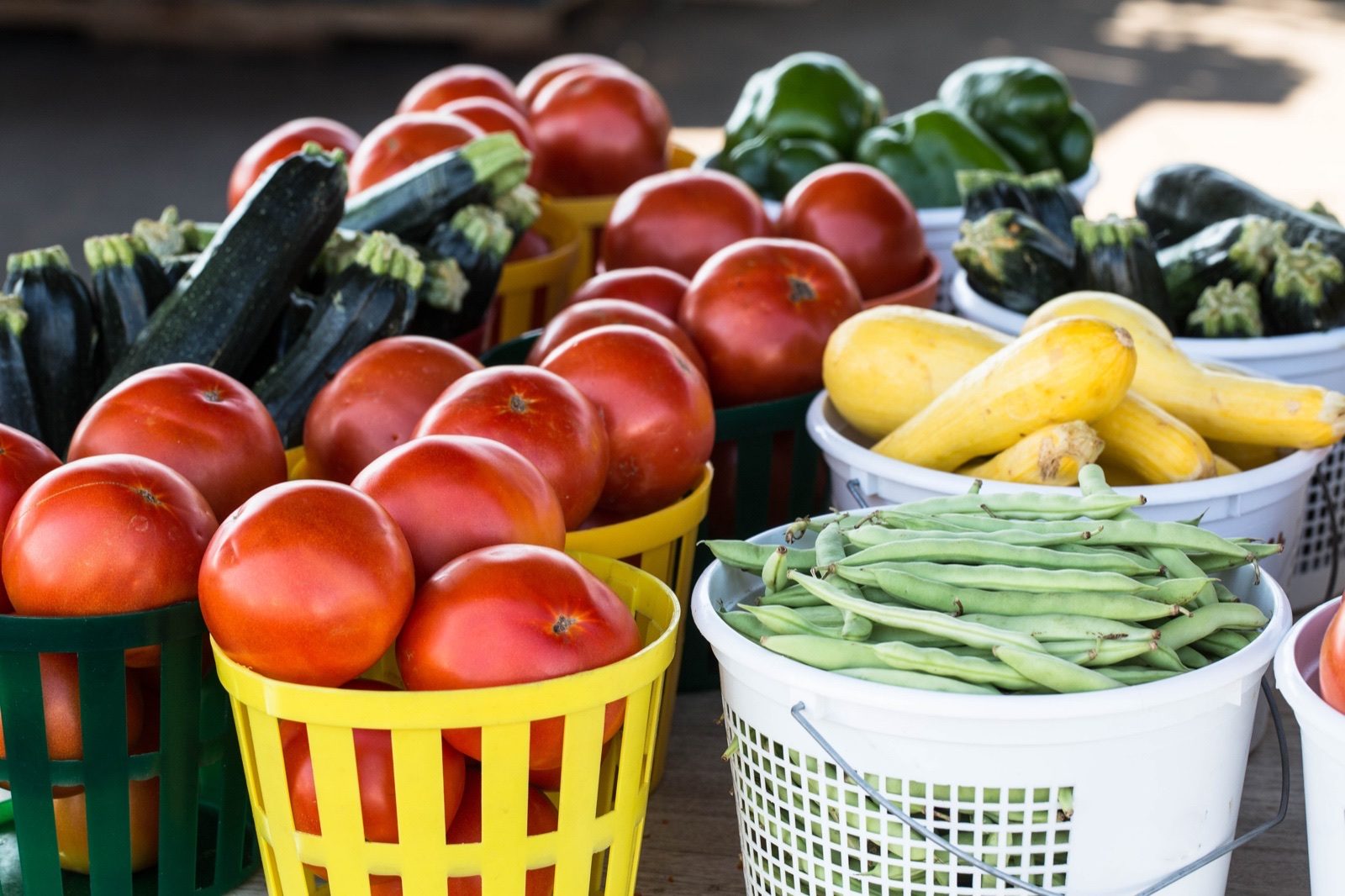
Most of a good diet is recognisable on a market stall without a label to explain it.
How to eat fewer times a day without dieting
Three meals plus snacks is a habit rather than a requirement, and eating less often is the lever most people have never pulled. The trick is to move slowly enough that you never feel you are depriving yourself.
Move your first meal later in fifteen-minute steps. If you normally eat at eight, eat at 8.15 tomorrow, 8.30 the day after, and keep going. Most people find that by the time they reach the middle of the day, the morning hunger they expected simply is not there. From there, two meals a day rather than three stops feeling like a decision.
Fifteen minutes a day is small enough that your body does not notice and your willpower is not involved, which is exactly why it works when a sudden change does not.
One straight caution. If you are on medication, pregnant or breastfeeding, diabetic, or you have any history of an eating disorder, talk to someone who knows your case before changing how often you eat. Fasting is not a small adjustment and it does not suit everybody. Our founder writes about his own experience of it, and it is offered as his experience rather than as instruction.
What to cut first
If you only remember one acronym, make it C.R.A.P.
- Carbonated drinks
- Refined foods
- Artificial anything
- Processed anything
Cutting those four does more than adding anything ever will, and it is the reason we would put “what you stop” ahead of “what you start” for anybody beginning. Sugar is the one that matters most and the one that hides in the most places, including in a great many products sold as health foods.
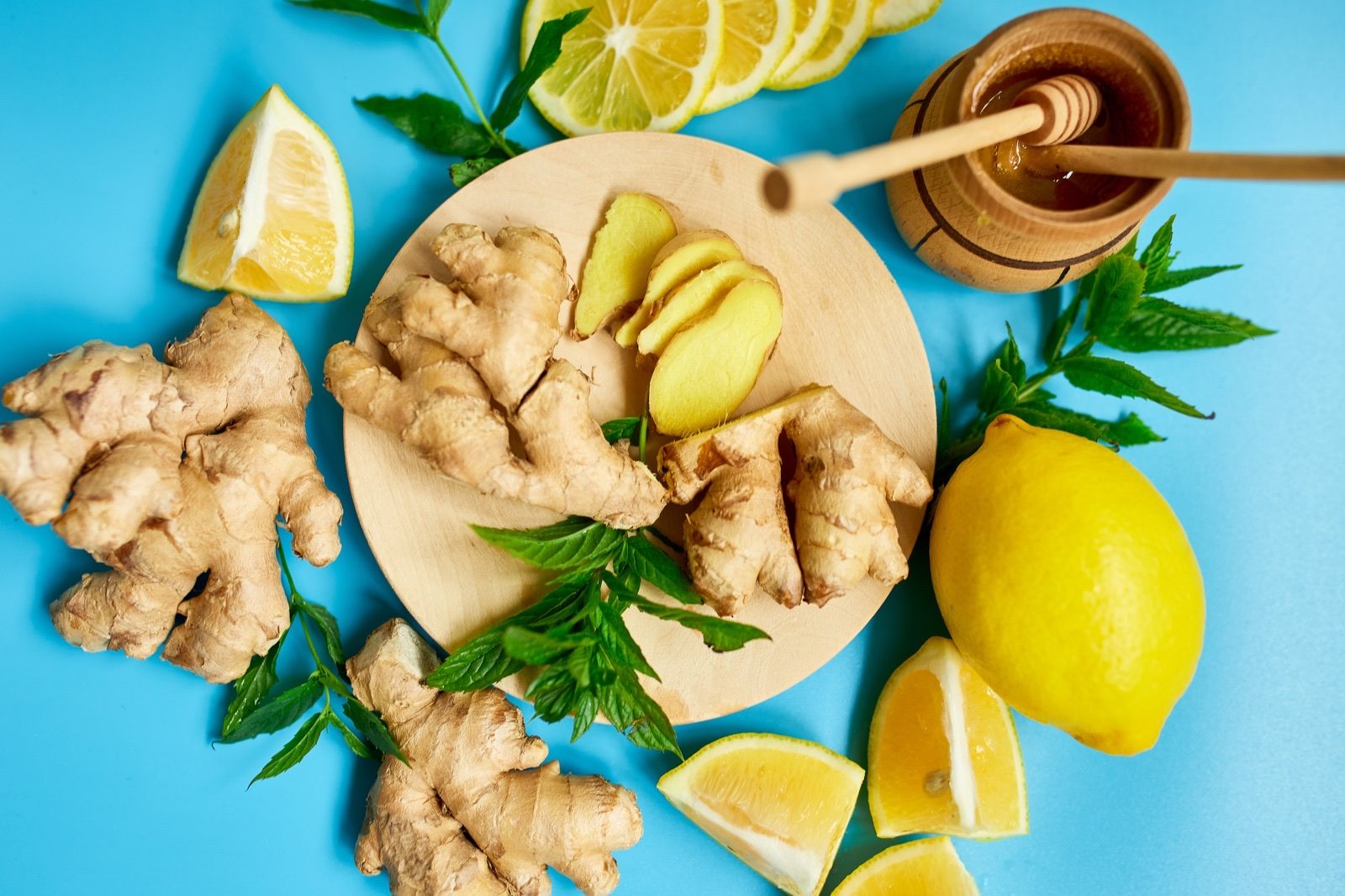
Almost everything worth eating is recognisable as a plant or an animal, and needs no label to explain it.
Beyond that: move every day, get outside, sleep properly, and take twenty minutes to sit still and do nothing. None of it is novel and all of it works, which is an annoying combination for anyone hoping for a secret.
Where a tonic fitsAlmost all the research on botanicals like turmeric, ginger and garlic is on taking them consistently over months, which is the part people fail at. A daily shot is a way of not failing at it. What a health tonic is, and the ten plants in ours.
Common questions about natural health
What is the best cleanse to reset your body?
None of them, in the sense the word is usually used. Your liver and kidneys do the clearing, they do it continuously, and no juice or powder takes that job over. What genuinely resets things is stopping what was causing the problem, and giving the gut a fortnight of decent food. That is less satisfying than a seven-day programme and it is what actually works.
Is natural health the same as alternative medicine?
No, and the distinction is worth holding on to. Natural health is about diet, movement, sleep and rest, and it sits alongside conventional medicine rather than in competition with it. Nothing on this site is a reason to skip an appointment or stop a prescription.
How long does it take to feel a difference?
Gut changes can begin within days. Most people describe the broader difference over a few weeks, and the botanical research generally runs to eight or twelve weeks before it finds anything. Progress is steady and unglamorous, and tracking what you eat against how you feel is the fastest way to see it.
Do I need supplements?
Food first, always. Supplements are worth it for a specific deficiency, which is worth testing for rather than guessing at. Everything else is easier to get from something you would recognise growing.
Start with the cabbage. Move your breakfast fifteen minutes later tomorrow. Neither costs anything and both put you further ahead in a month than any programme you could buy, which is the most encouraging thing about natural health once you stop looking for the trick.
This article is for general information and is not medical advice. Natural Elixir is a natural health tonic and is not intended to diagnose, treat, cure, or prevent any disease. Always speak to a healthcare professional before changing your diet, supplements, or medication, and never stop prescribed treatment without medical guidance.