

Why am I tired all the time?
Usually one of four things, and they are worth telling apart before you buy anything at all.
Not enough sleep, or not enough good sleep, which are different problems. Something measurable in your blood, most often low iron stores, an underactive thyroid, or blood sugar heading the wrong way. Mood, because low energy is one of the most common ways depression presents and often the first thing a person notices. And the shape of the day: too little daylight, too little movement, alcohol in the evening, caffeine too late, and a sugar spike every afternoon.
The first three want a doctor, and the blood test list further down is the most useful thing on this page. The fourth is where food comes in, and it is the reason most people reading this are here: what we make is a daily shot of ten raw plants with no caffeine and no sugar in it. Whether that has anything to do with how your afternoons go is a fair question, and the next two sections are our best attempt at answering it properly.
What people notice first, and whether that counts as evidence
Ask anyone who takes a botanical shot daily what they noticed, and the answer is very rarely the thing they started taking it for. It is almost always something about the middle of the afternoon, or about the last ten minutes of a training session feeling like less work than it usually does. People often describe noticing it before they had thought to attribute it to anything.
So does that count for anything? It counts for a great deal, and this site has already made that argument once.
People noticed that colds arrive with cold weather for as long as there have been people and colds. The word itself is the theory. Then virology arrived, rhinovirus was identified, and the observation was demoted to an old wives’ tale in a single generation, which was fair on the mechanism and unfair on the observation. In 2022 a study found that cooling the nose measurably reduces the antiviral defence in the nasal lining, which is a direct mechanism for the seasonal pattern. The people noticing were right the whole time. The explanation was simply two thousand years late.
Everybody’s gran was right about the cold, and it took until 2022 to find out why. Observation at that volume is not nothing. It is a finding waiting for its mechanism.
That is the honest weight of a widely repeated observation: it is real signal, and it tells you where to look. It is how most of pharmacology started, willow bark and foxglove and quinine included, and it is why the ingredient pages on this site take traditional use seriously rather than smirking at it. The full version of that story is here.
What it cannot do on its own is separate the thing from the expectation of the thing, and self-reported energy happens to be about the most expectation-sensitive measure in the whole of medicine. So an observation this consistent is an instruction rather than a conclusion: go and find out whether anything measurable is happening. That is what the next section is.
What the research on these plants and energy shows
More than we expected, and the strongest strand of it is the one nobody talks about.
Vinegar and the afternoon crash. A systematic review and meta-analysis of clinical trials found that vinegar taken with a meal significantly reduces the blood glucose response afterwards, pooling to about 14.6 mg/dL lower post-meal glucose, with insulin lower alongside it. It works in healthy people, not only in people with a glucose problem. Since the afternoon slump is largely the far side of a post-meal glucose rise, that is a measured mechanism sitting directly underneath the thing people report noticing.
Shishehbor et al., Diabetes Research and Clinical Practice, 2017Systematic review and meta-analysis of clinical trials: vinegar attenuates postprandial glucose and insulin responses. Read the meta-analysis
And here the dose is on our side, which is rare enough to say plainly. Those trials mostly used one to two tablespoons of vinegar, roughly 15 to 30 ml, taken with food. That is a kitchen quantity rather than a laboratory one, and apple cider vinegar is a substantial part of a 25 ml shot. This is the one place on this site where what the studies used and what a person actually swallows are in the same order of magnitude.
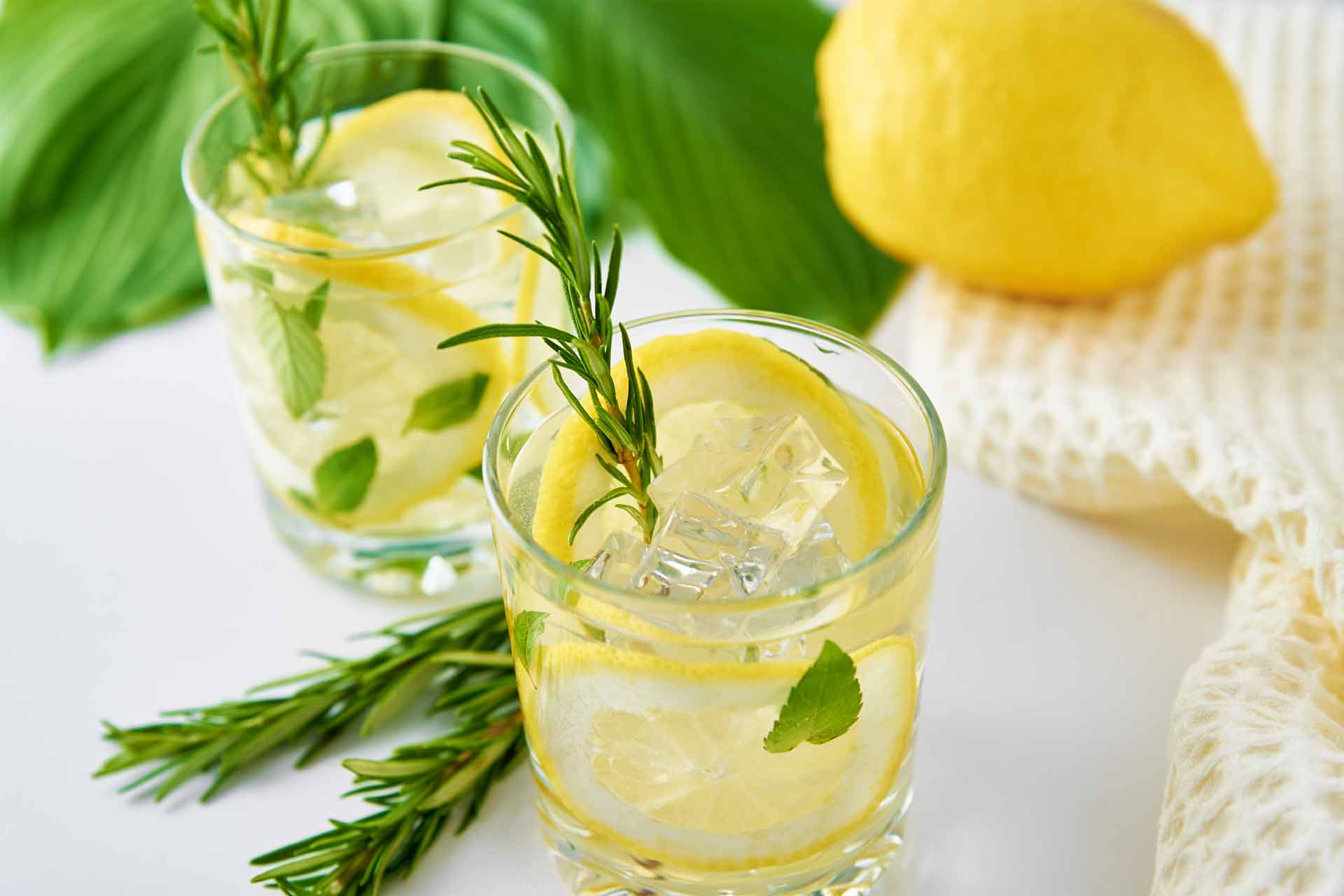
Vitamin C carries an authorised claim for the reduction of tiredness and fatigue. What is in our bottle has not been measured, so there is no figure here yet.
Capsaicin and how hard the work feels. This is the finding that matches what people describe most closely. A meta-analysis of capsaicin and capsiate supplementation found a significant improvement in acute resistance exercise performance, and individual trials found something more interesting than the performance number: a lower rate of perceived exertion and a lower mean heart rate during hard intervals. Not feeling stimulated. The same work feeling like less work.
Capsaicin and capsiate, meta-analysis, 2022Significant improvement in acute resistance exercise performance. Read the meta-analysis · de Freitas et al., 2019Lower perceived exertion and heart rate during high-intensity intervals. Read the trial
The inconvenient half of that one is worth having. The trials that found the effect mostly used isolated capsaicin at around 12 mg. Trials using whole cayenne powder have been much less consistent, and 500 mg of dried cayenne carries only about 1.2 mg of capsaicin, so 12 mg is in the region of five grams of cayenne. Nobody is getting that from a shot, or from dinner. The mechanism is real and the food-scale version of it is unproven.
Curcumin and what the next day feels like. Meta-analyses of curcumin around exercise report reduced delayed-onset muscle soreness, lower creatine kinase, a marker of muscle damage, and better range of motion in the days afterwards. Tiredness the day after training is partly soreness and partly repair, so this belongs in a conversation about energy even though it is not an energy study. Supplement doses again, and the black pepper in the bottle is there because it is what makes curcumin absorbable at all.
Meta-analysis of curcumin and skeletal muscle damage, PLOS One, 2024Reduced creatine kinase, muscle soreness and IL-6; improved range of motion. Read the meta-analysis
And vitamin C, which is the only one of these with a claim a regulator has already approved. European regulators assessed the evidence and permit the statements that vitamin C contributes to normal energy-yielding metabolism and to the reduction of tiredness and fatigue. Using that claim requires a measured amount per serving. Lemon is a good source and there is fresh lemon in every bottle, but we have no laboratory figure for ours yet, so there is no number here and no claim made from it. Getting it measured is on the list.
EFSA Panel on Dietetic Products, Nutrition and Allergies, 2010Vitamin C and reduction of tiredness and fatigue, and contribution to normal energy-yielding metabolism. Read the scientific opinion
Where a daily tonic fits, and where it does not
What it is: a small daily measure of ten raw plants with no sugar in it at all, a laboratory-verified zero rather than a rounding claim, and no caffeine in any of the ten. On this subject that absence is the feature.
Here is why. A meta-analysis pooled 31 studies and 1,259 people to test what carbohydrate does to mood and alertness. It found no improvement in any aspect of mood at any point afterwards. What it did find was increased fatigue within thirty minutes and reduced alertness within an hour. The sugar rush does not appear in the data. The crash does.
Mantantzis et al., Neuroscience & Biobehavioral Reviews, 2019176 effect sizes from 31 studies, 1,259 participants. No mood benefit at any time point; raised fatigue within 30 minutes. Read the meta-analysis
A sweetened drink buys twenty minutes and charges an hour for it. A sharp, sour, sugar-free one taken with food is doing the opposite thing to your afternoon.
So the useful question about a three o’clock pick-me-up is not what it contains but what it replaces, and that is where the vinegar research and the sugar research meet. Taken with food, a sour shot is working with your afternoon rather than borrowing from it.
What it is not: a stimulant, an energy drink, or a treatment for tiredness. It will not correct an iron deficiency, a thyroid problem or a fortnight of five-hour nights. And one practical warning that matters more than the sale: the tonic is acidic, measured at pH 3.06, so if you have reflux take it with food rather than on an empty stomach, and if it burns, stop.
What else raises energy, according to the evidence
Four things, and the least intuitive one first.
Moderate exercise reduces fatigue rather than spending it, which is the finding people most often have backwards. Regularity beats duration: a steady wake time does more for daytime alertness than an extra hour on a chaotic one. Morning daylight is the main signal your body clock runs on, so a walk early covers two of these at once. And alcohol shortens the time it takes to fall asleep while wrecking the second half of the night.

Light and movement together, early. The least glamorous thing on this page and the one with the best return.
When tiredness needs a doctor
Tiredness is the symptom people tolerate longest and investigate least, and it is the presentation where a cheap blood test most often finds something worth treating. Do not spend six months on plants first.
If you have been tired for more than a few weeks without an obvious reason, four tests are worth asking for by name: a full blood count, ferritin for your iron stores, thyroid function, and HbA1c or a fasting glucose.
Ferritin is the one most often left off and the one with the clearest evidence behind asking for it. A double-blind placebo-controlled trial of 144 women with unexplained tiredness and no anaemia found iron helped, and that the benefit was confined to those whose ferritin was at or below 50 µg/L. A later trial in blood donors found no effect at all. Together they say something practical: iron is worth taking if you are genuinely short of it and worth nothing if you are not, and the test is the only way to know which you are.
Verdon et al., BMJ, 2003144 non-anaemic women with unexplained fatigue, oral iron versus placebo. Benefit restricted to ferritin at or below 50 µg/L. Read the trial
And see someone promptly, rather than at some point, for any of these.
- Breathlessness, chest pain or a racing heartAlongside the tiredness, or on exertion that used to be easy.
- Weight loss you did not intendOr night sweats, a fever that keeps returning, or swollen glands.
- Loud snoring with pauses in breathingEspecially with waking unrefreshed after a full night. That is sleep apnoea, and it is both common and very treatable.
- Heavy periods, or blood in your stoolBoth are routes to iron loss, and the second needs looking at anyway.
- Constant thirst and passing water oftenAsk for the glucose test without waiting.
- Low mood, or losing interest in thingsDepression often arrives as exhaustion rather than sadness, and it is treatable. Worth saying out loud even when it feels like the least medical thing here.
If you take medication, mention anything botanical you add. Turmeric, ginger and garlic can all add to the effect of blood thinners, which is a reason to tell your pharmacist rather than a reason to avoid them.
What to try this week
- Book the blood testFull blood count, ferritin, thyroid, HbA1c. Ask for ferritin specifically, because it is the one most often left off.
- Fix the wake time before the bedtimeSame time every day for a fortnight, weekends included. The bedtime tends to follow on its own.
- Get outside within an hour of wakingTen minutes is enough to be worth doing, and it works better than the same ten minutes later in the day.
- Take anything sour with the meal, not after itThe vinegar trials gave it with food, because that is when it does anything to the glucose response. A shot on an empty stomach is the least useful version.
- Move the afternoon sugar, do not just remove itSomething with protein or fat in it instead of the sweet thing, and notice how four o’clock goes.
What we makeA daily 25 ml shot of ten raw plants, with no sugar, no caffeine and no preservative. A food rather than a treatment, and best taken with a meal. Everything that is in it, or the range.
Common questions about low energy
Why do people say a health tonic gives them energy?
It is the most commonly reported thing about drinks like this, and it is reported often enough to be worth taking seriously rather than waving away. There are measured mechanisms that could plausibly sit underneath it: vinegar flattening the post-meal glucose rise at a food-scale dose, capsaicin lowering how hard physical work feels, and the simple fact that a sugar-free drink does not produce the crash a sweetened one does. What nobody has done is test this tonic itself in a trial, so what you have is a good hypothesis rather than a proven effect.
Should I take an iron supplement if I am tired?
Get the ferritin test first. Iron helped in the trial above only in women whose stores were low, and taking iron you do not need is unpleasant at best. Too much is genuinely harmful, and it is not a supplement to guess with.
Why am I still tired after eight hours of sleep?
Usually because the eight hours were poor rather than short. Alcohol, a late meal, an irregular bedtime and untreated sleep apnoea all produce a full night that does not restore anything. Waking unrefreshed most mornings, especially with snoring, is the pattern worth taking to a doctor.
This article is for general information and is not medical advice. Natural Elixir is a natural health tonic and is not intended to diagnose, treat, cure, or prevent any disease. Persistent tiredness deserves a proper medical assessment. Always speak to a healthcare professional before changing your diet, supplements, or medication, and never stop prescribed treatment without medical guidance.