

Why natural health and conventional medicine both have a place
I was asked to write a piece about the pharmaceutical industry, and to give them both barrels for taking over the market in natural medicine. I said yes immediately. After what I had been through I felt I had earned the right, and I had a list ready.
Then I went to the dentist to have a small filling repaired, and the dentist damaged a nerve in my lower jaw.
The tooth that changed the article
I have broken both knees, an ankle and my nose. I have had more than fifty gallbladder attacks. I have had gangrene in my legs. None of it comes close to the pain of a damaged nerve in a tooth.
What got me upright and able to think was a Schedule 5 pharmaceutical painkiller. Not a plant, not a tincture, not anything I make. And I sat there with the very thing I was supposed to be attacking doing for me what nothing in my own cupboard could have done.
I was writing an attack on Big Pharma with Big Pharma in my bloodstream, and it was the only reason I could hold a pen.
You can take that as an irony and move on. I took it as information.
Eleven years earlier I had been given six weeks to live, and medicine had not been able to help me then. That is true and I have never pretended otherwise. But “it could not help me with that” is a very different sentence from “it is worthless”, and I had been sliding between the two without noticing.
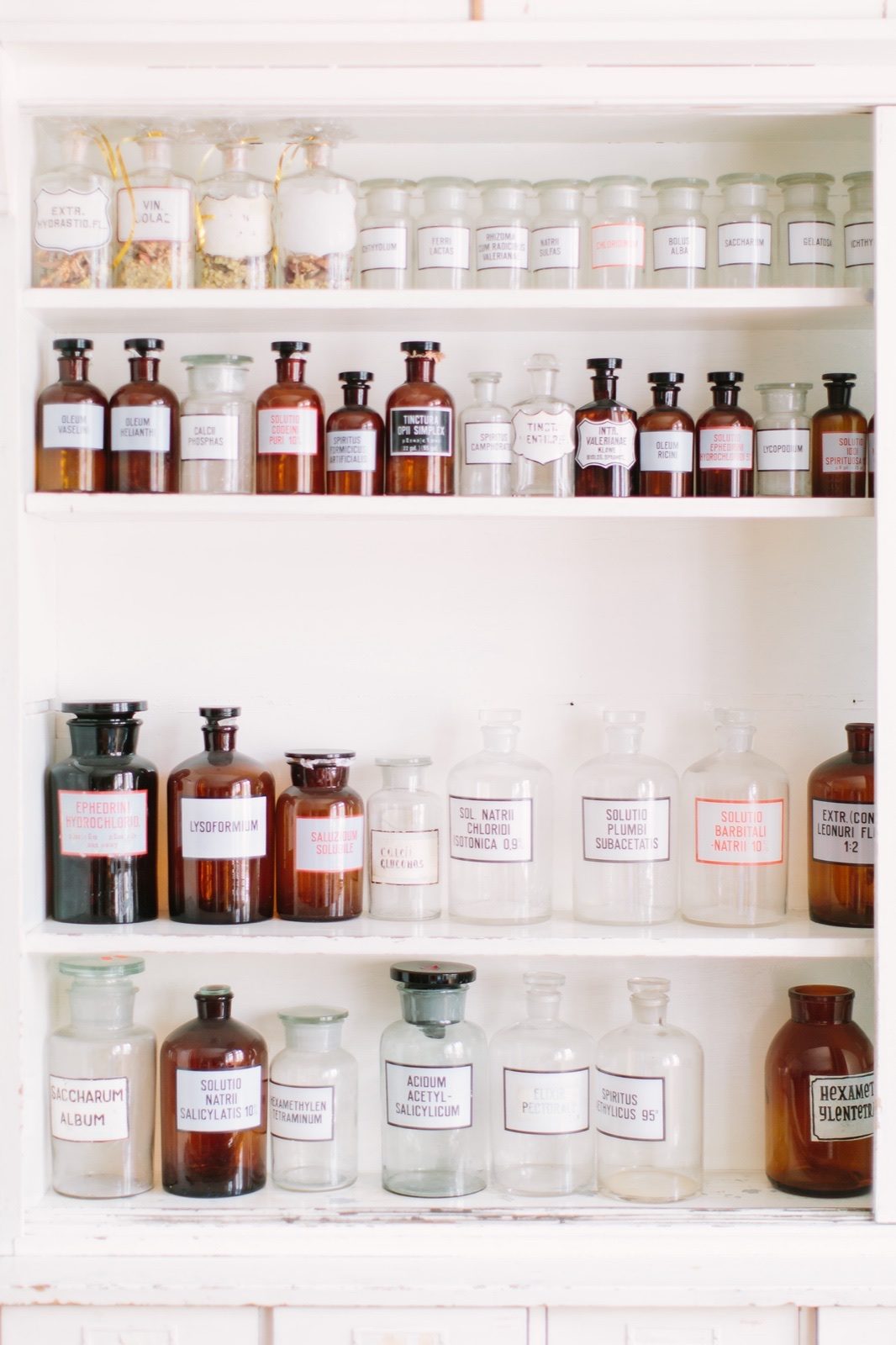
Every pharmacy started as a room full of plants. The split between the two is more recent than the argument about it.
What the rules are actually for
The other thing I used to say was that the regulations exist to squeeze out the small grower and the medicine man. Some days it certainly feels like that from where I stand, filling in forms.
But the rules are there for a reason. They exist to protect the person buying the bottle. They exist because it is genuinely easy to sell somebody hope, and because when a product is presented as a treatment for a disease, people make decisions about their actual medical care on the strength of it. Some of those decisions cost them everything.
I sell a bottle of plants. I am not neutral about this. And I would still rather work in an industry where somebody has to be able to prove what they print, because the alternative punishes exactly the customers I care about.
It is also why this website has been rewritten from the ground up, and why every ingredient page tells you where the evidence is thin as plainly as where it is strong.
Where the responsibility actually sits
Here is the part I most want to say, and it is not comfortable.
The industry is powerful because we hand it that power, daily, and mostly without thinking. Nobody made me smoke a hundred cigarettes a day. Nobody made me eat the way I ate for twenty years. By the time I was in that doctor’s room being given six weeks, I had spent two decades building the problem, and then I was disappointed that somebody else could not undo it in an afternoon.
That is not a comfortable thing to work out about yourself and it was the most useful thing I ever worked out. The moment the responsibility came back to me was the moment anything changed.
Nobody is coming to undo twenty years for you in an afternoon. That is not a criticism of medicine. It is arithmetic.
So the useful question was never “who is to blame”. It was what I eat, how often I eat it, whether I move, and whether I am going to keep it up.

Blood work tells you things no amount of intuition will.
How I use both, in practice
Plainly, because people ask me this at markets and deserve a straight answer:
- Food, movement and sleep are the daily workThat is where the long game is won and it is almost entirely in your hands.
- When something is acute, get it treatedA damaged nerve, a broken bone, an infection, a heart that is misbehaving. This is what medicine is extraordinarily good at and it is not the moment for a tincture.
- Get tested rather than guessingBlood work tells you things no amount of intuition will.
- Never stop a prescription to try something naturalIf you want to change your medication, that is a conversation with your doctor, not a decision you make after reading anybody’s website. Including mine.
- Tell your doctor what you are takingGarlic, ginger and turmeric all interact with blood thinners. That is not a reason to avoid them; it is a reason to mention them.
What we actually sellA daily shot of ten raw plants, with no sugar and no preservative. It is a food, not a medicine, and it is not intended to treat anything. What each plant is and what the research says is on the ingredient pages, cautions included.
There is room for everybody
I still think natural health is under-served and often talked down to, and I still think a lot of people would need far less medicine if somebody had shown them what to eat thirty years earlier. That has not changed and it is why I do this.
What has changed is that I no longer think there is a war on, or that winning one would help anybody. I believe there is a place for everyone in this world, and that we do better to learn from each other and work together where we can.
The piece I was asked to write would have been more fun. This one is what I actually think.
Brett Austin, founder, Natural Elixir
This article is one person’s opinion and account of his own experience, and is for general information. It is not medical advice. Natural Elixir is a natural health tonic and is not intended to diagnose, treat, cure, or prevent any disease. Always speak to a healthcare professional before changing your diet, supplements, or medication, and never stop prescribed treatment without medical guidance.